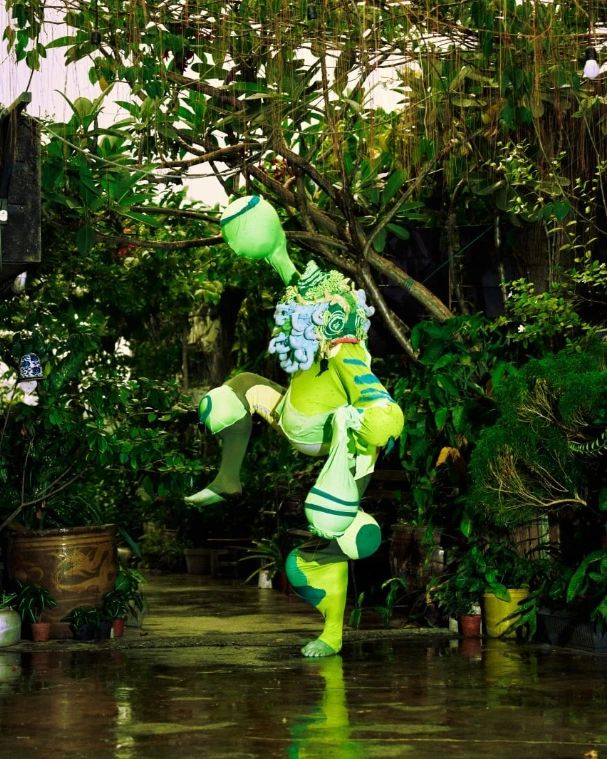
Creatures From the Hole breakthru #2 on Asian Tour:
We Present The Green Thing. Strange and Mysterious
adversary
and/or companion to the Awful & Unknowable Pink Thing....
posted on Instgram @enormousface
Post-natural Human-Nature Relationships
Going into week 5, we were tasked to start framing our concepts and present them in a "concept" mindmap including the three reserach pillars and how they overlap. Starting to be overwhelmed with concepts, I seeked speculative design and existing practioners for some clarity.
① Concept Mindmap 🧠
The concept mindmap branches out from human and nature relationship with queer ecology as a framework, technological sensors as a tool and speculative/critical design as a vehicle to (well, at this point) reframe people's mindset about being close to nature.
After presenting my Research Proposal Outline, the atelier’s feedback was that I needed to stop describing and start drawing parallels. I was then given a suggestion that I do not need to write straight away in Google Docs. I can put my reading notes first and then bring them together on Google Docs. He suggested that my second pillar should be "sensing" instead of "sensors".
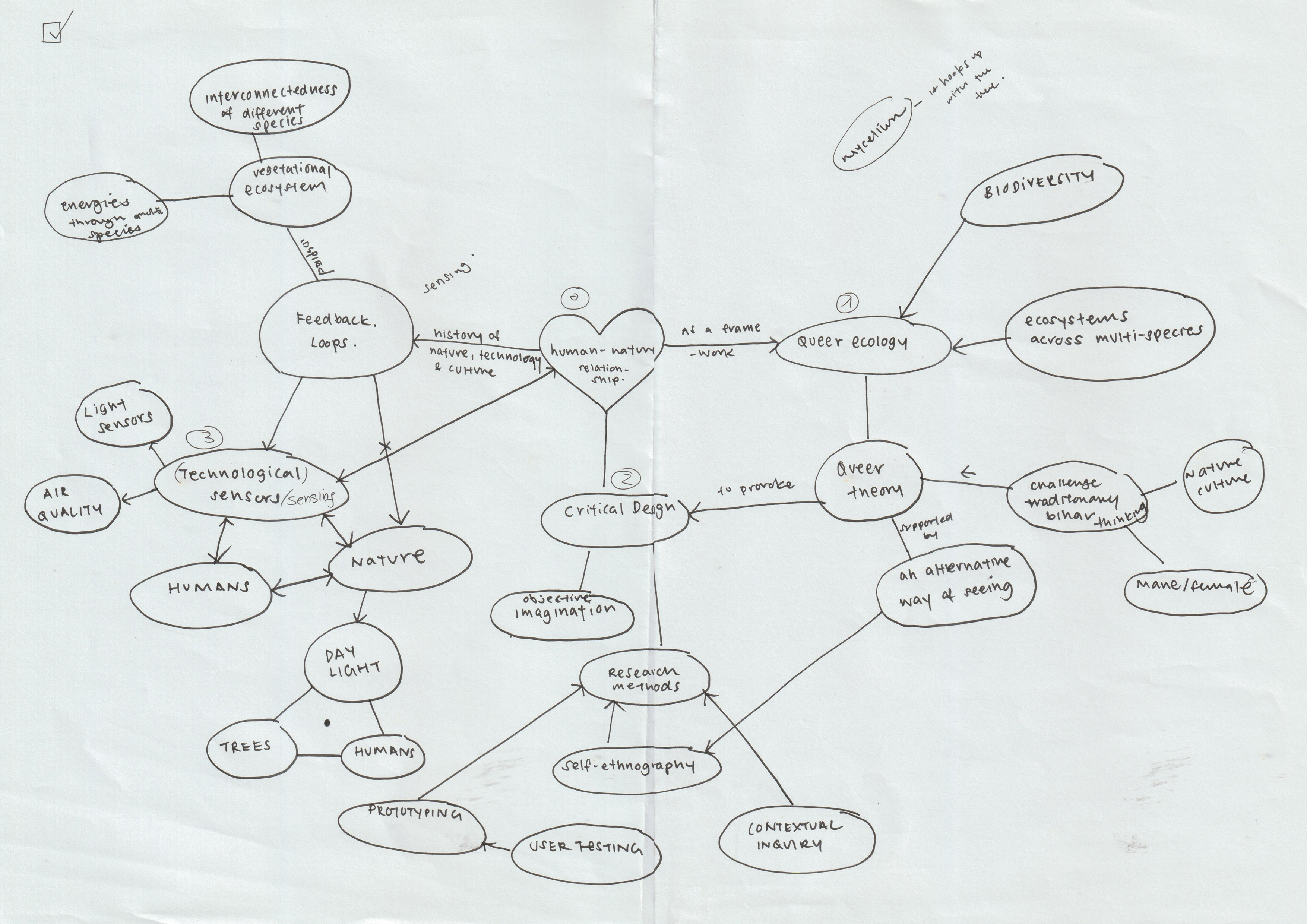
Concept Mindmap 10 September 2024
Reflection
At this point of my research, one of the main challenge was not being able to find the right readings especially related to design. The question that was bogging me was "am i even design at this point?". Prompted by the frustration, I went to read on a literature review on "Ethics, Ecology, and the Future: Art and Design Face the Anthropocene" by Kayla Anderson - where I reflected on the differences between art and design in environmental projects.
As I was busy with other commitments during this week, my research were mainly seeking communities or practitioners around the body and nature or nature and computational design where they blur the lines between natural and unnatural relationships with the environment.
② A quick case study on environmental projects 🔎
Since the introduction of Madeline Schwartzman's practice, I have been noticing a lot of similar practices that revolves around the body, senses and environment. This week I decided to curate them into a tiny collection just for keep sake and sharing!
-
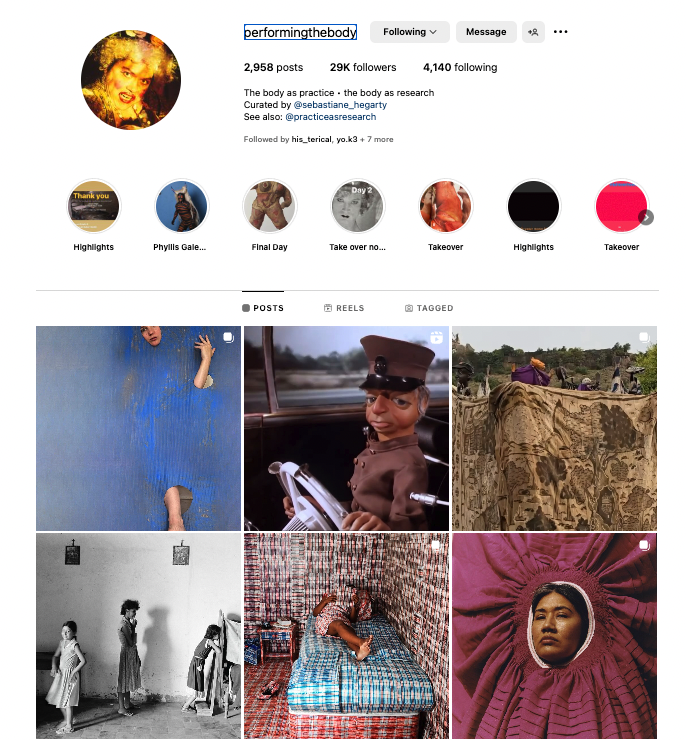
→ a collection of performances. Some deals with altering one's body, some change the environment, and some are just all.
→ Performing the Body Instagram Account
-
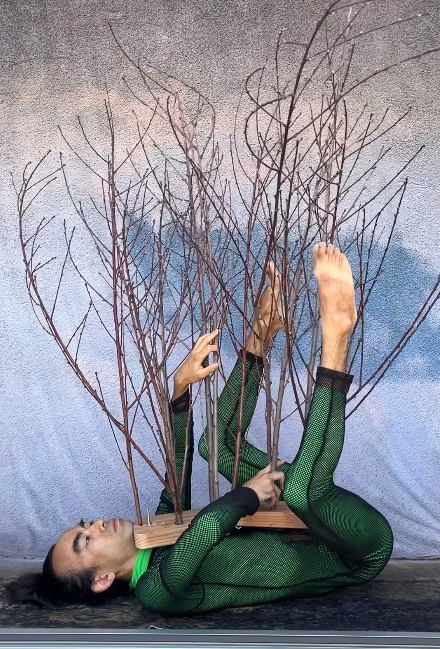
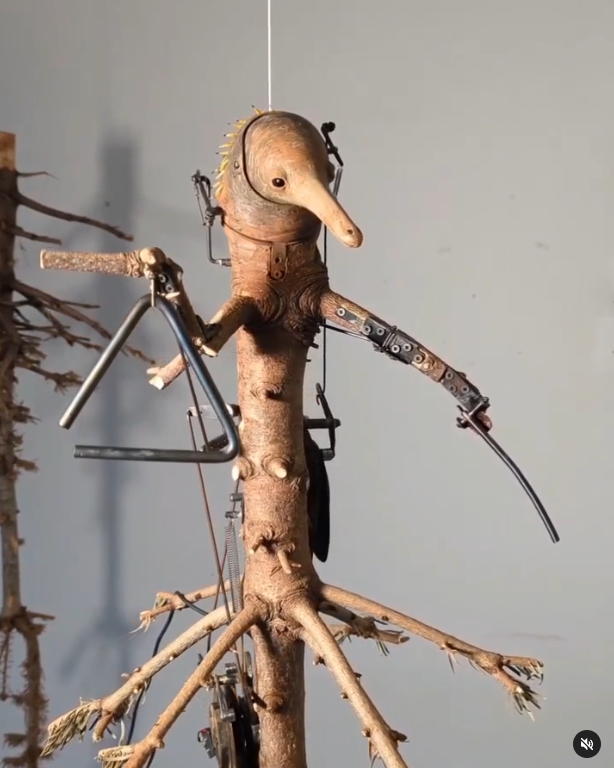
→ He has dead tree branches as feet. He looks like an upside-down tree. He performed music by transforming tree branches into a harp.
→ Eda Geta / 枝下駄 (2024) Shoji Yamasaki
-
→ Kinetic sculpture with tree branches making music
→ The Forest Visits @timlewis.info
-
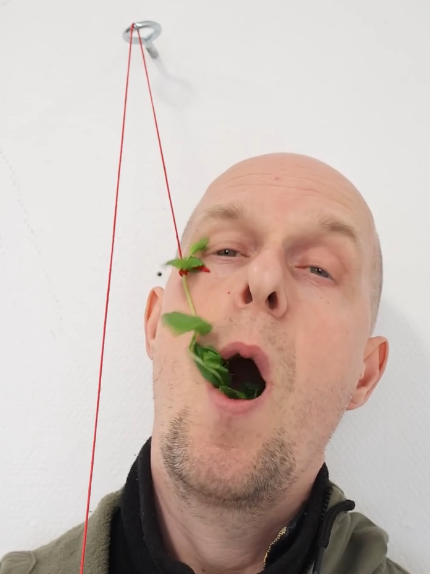
→ Just pure puppetry genuis. Funny guy.
→ "Personal Growth" Jan Hakon Erichsen
-
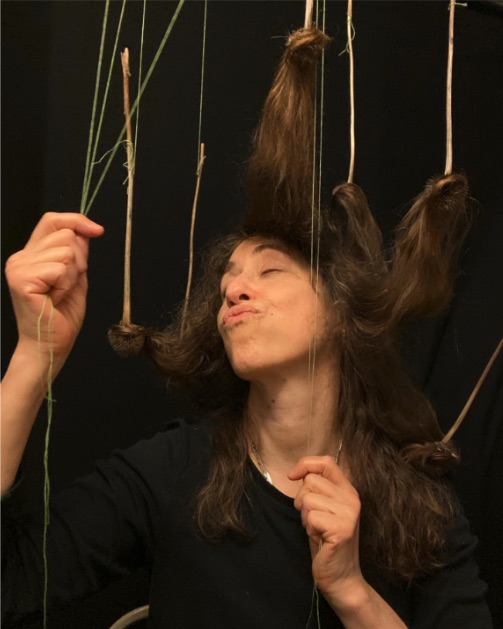
→ If you were here since Week 1, you already know.
→ "hair face nature with coneflower seed heads" Madeline Schwartzman
-
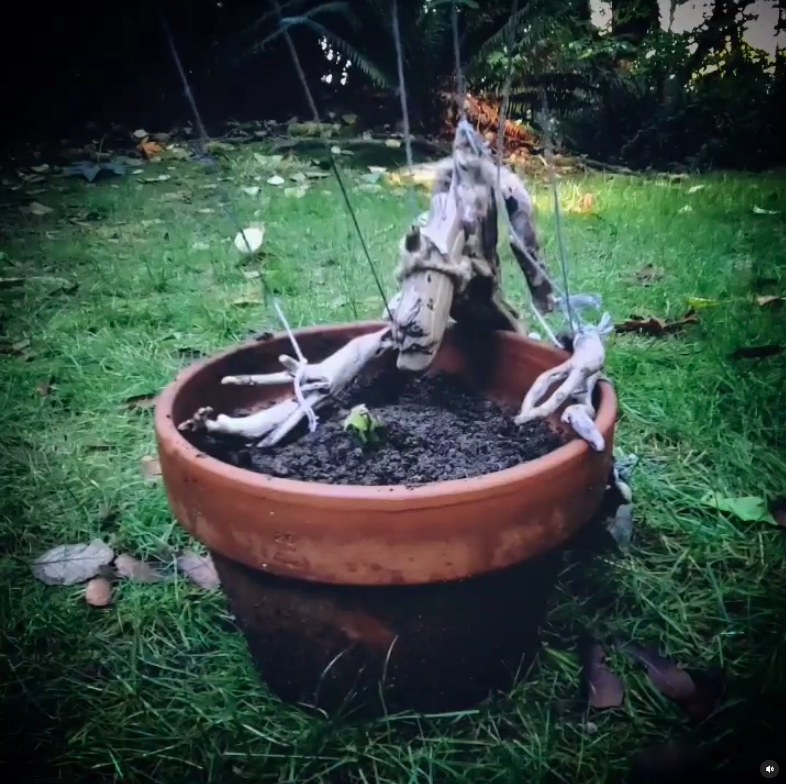
→ one of the best discoveries so far. Also, I found out that Madeline Schwartzman commented on one of his works
→ -nocaption- @enormouseface
-
-
→ Oh, my. God. This is another discovery that I love… it’s so cute!! You just have to see for yourself. Also, shout out to the handwritten notes on the control board - like it's not that serious.
→ Unicorn Diaroma @sam.t.rees
This search could be endless; sometimes, I can’t determine if they're design or art. I recall this paper, ‘Ethics, Ecology, and the Future: Art and Design Face the Anthropocene,’ in which the writer suggested that art is ‘easier to deal with’ because, at the end of the day, it remains in the gallery, but a radical work of design continues to disturb, as "it suggests that everyday life as we know it could be different, that things could change.’ Citing projects like United Micro Kingdoms Biocar (2012) and Foragers, from Between Reality and the Impossible (2010) by the famous Anthony Dunne and Fiona Raby.
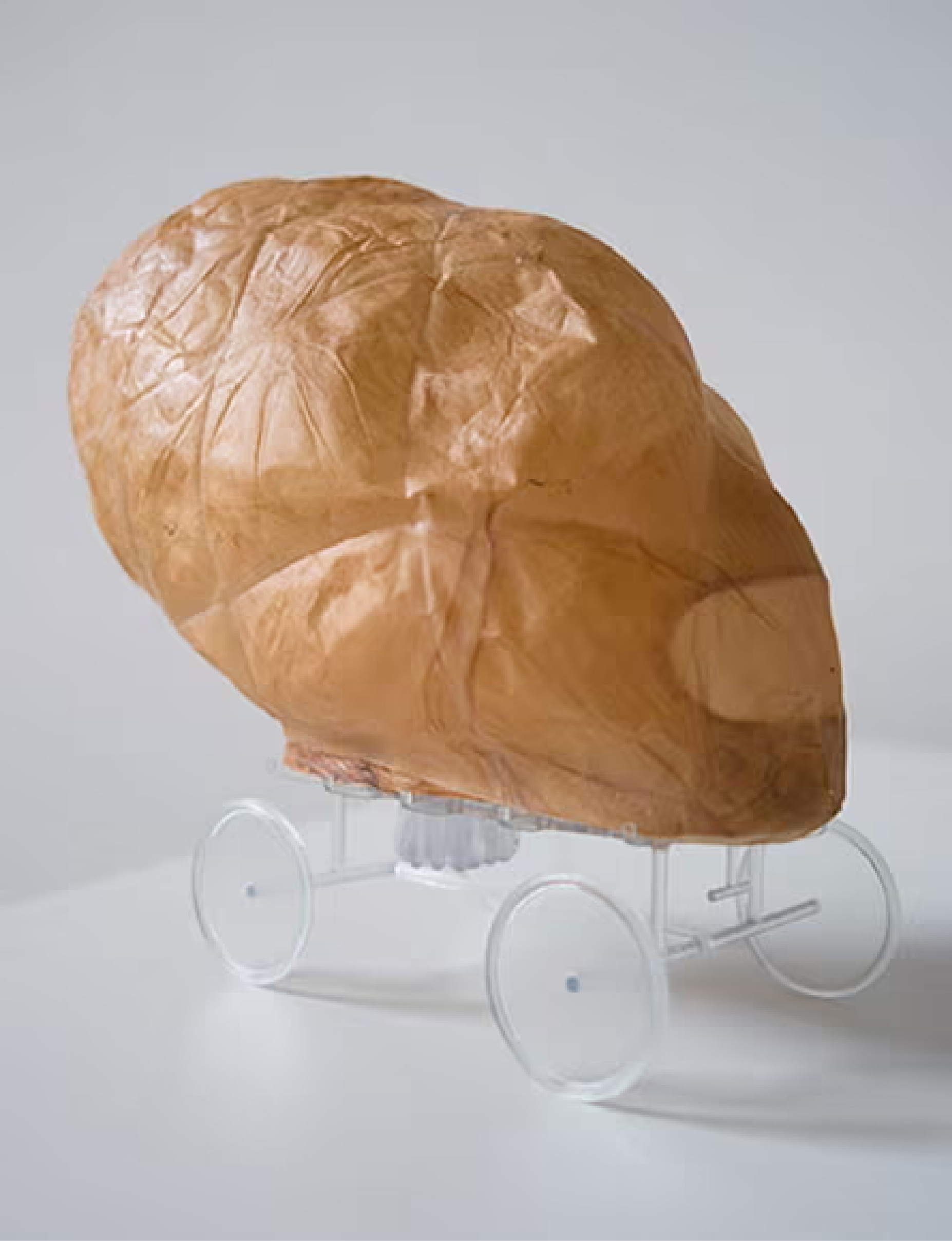
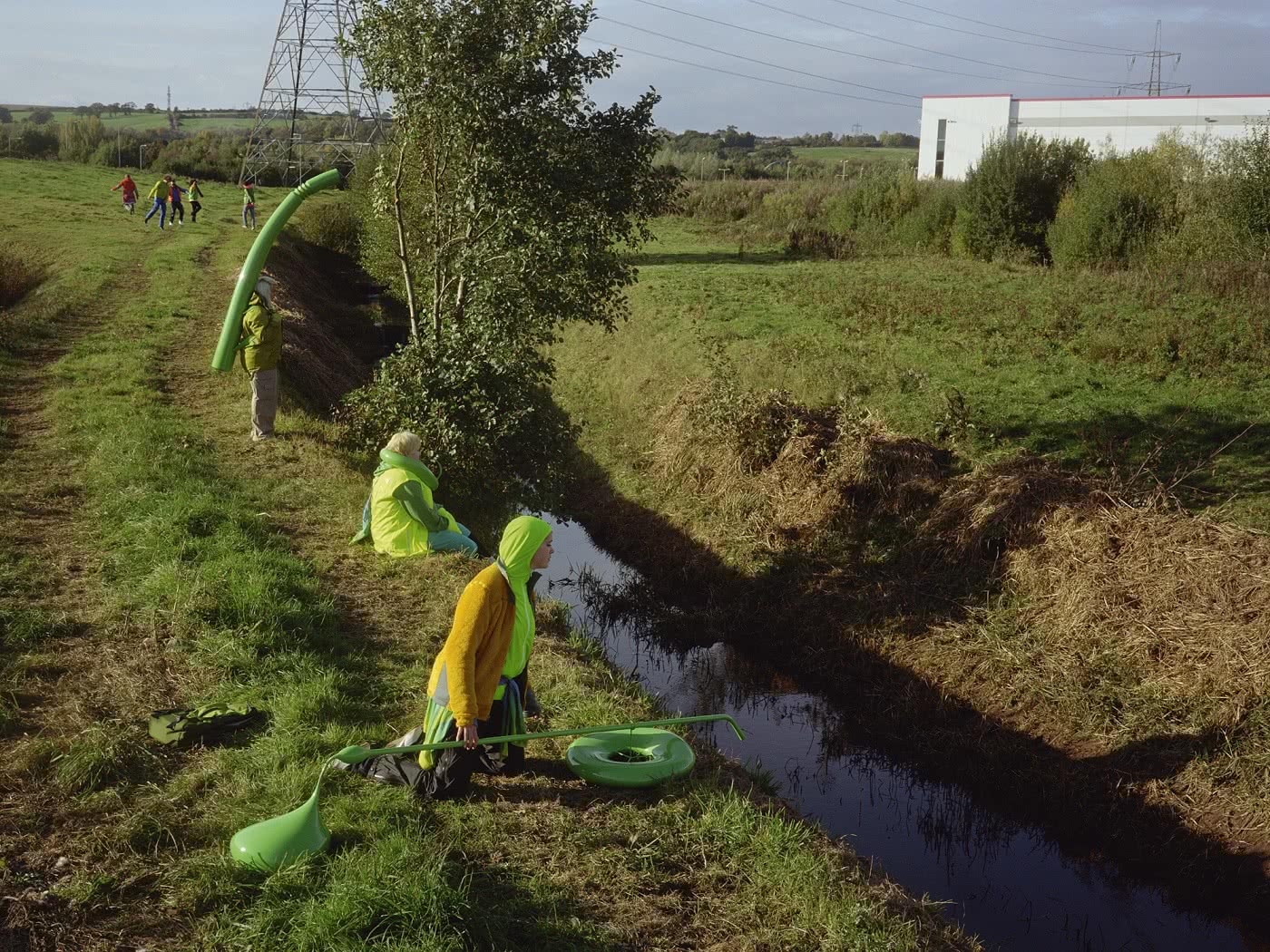
The writer suggests that projects led by design have a greater chance of minimising human biases because they approach people rather than inviting them to change their mindsets. This is why speculative design exists, a method of design that inspires designers or artists keen on advocating for climate action to continue finding the middle ground. It adds to diverse projects contributing to an equitable planet for all species.
Reflection 😮💨
I just realised my interest is so hard because well, this is a communication design course. So, one of the biggest challenges for this research is how well I can convey the interest in this bodily interaction with non-human species practice using technology to encourage people to care more about our planet. The obvious solution would just be curating these case studies into an engaging medium. However, my goal is to add another case study to these ‘alternative’ human-nature interactions with design.