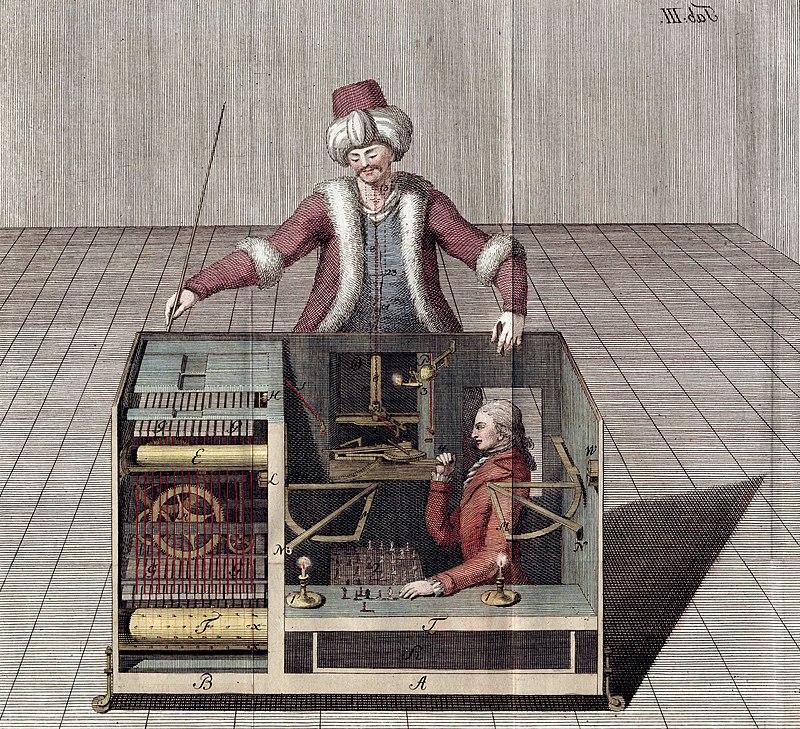
The Mechanical Turk also known as the Automaton Chess Player
was a fraudulent chess-playing machine
constructed in 1770
- a mechanical illusion
Pretending to be a machine 🤖
Going into this week, I recognised that the research proposal outline (RPO) and other commitments had taken up much of my time. I decided to leave them aside and started making things to gain some clarity. I may not know the research objectives for now, but I know my source of inspiration and how they relate.
① First Step: Shopping! 🛒
Taking cues from practioners such as Jan Hakon Erichsen, which I curated last week, I prepared a shopping list of tools and went to a nearby hardware store to kickstart my making process.
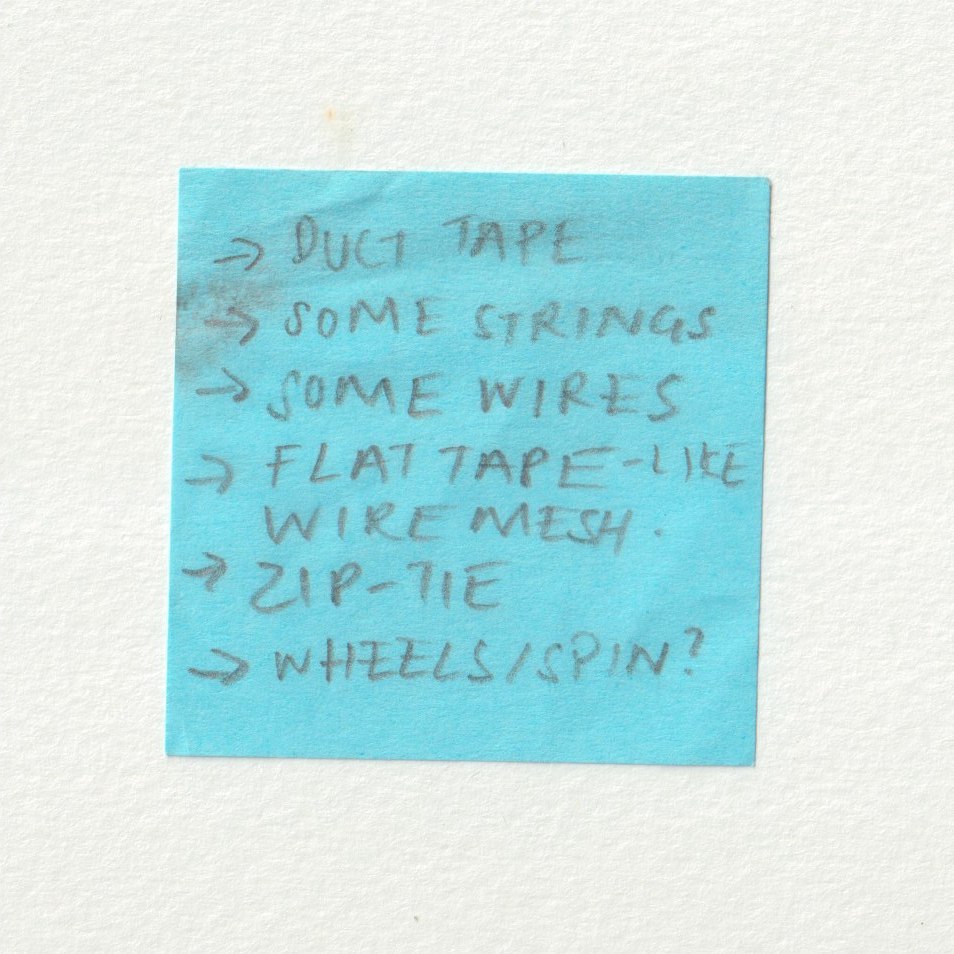
Shopping List 18 September 2024
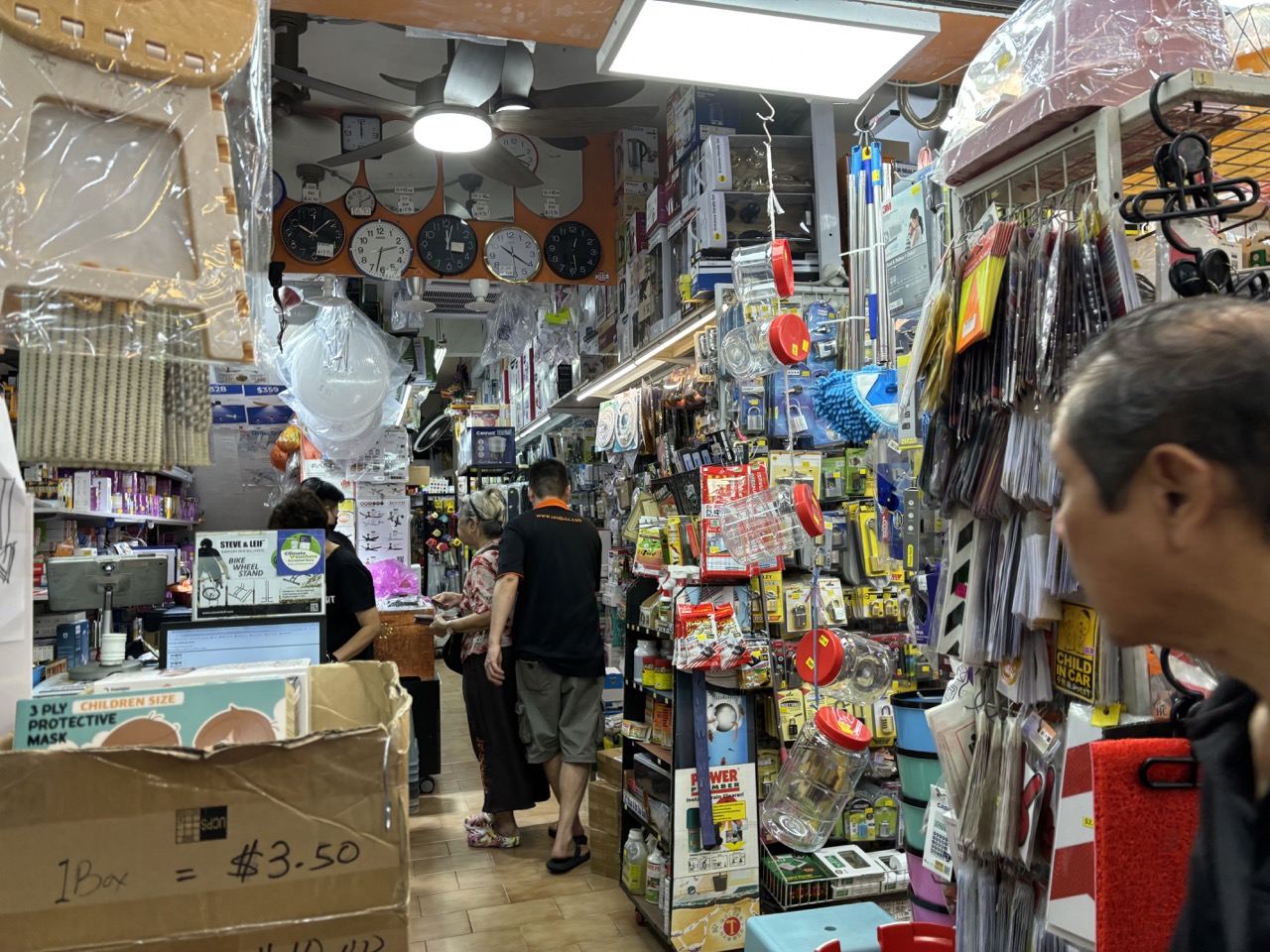
Hardware Store in Kovan 18 September 2024
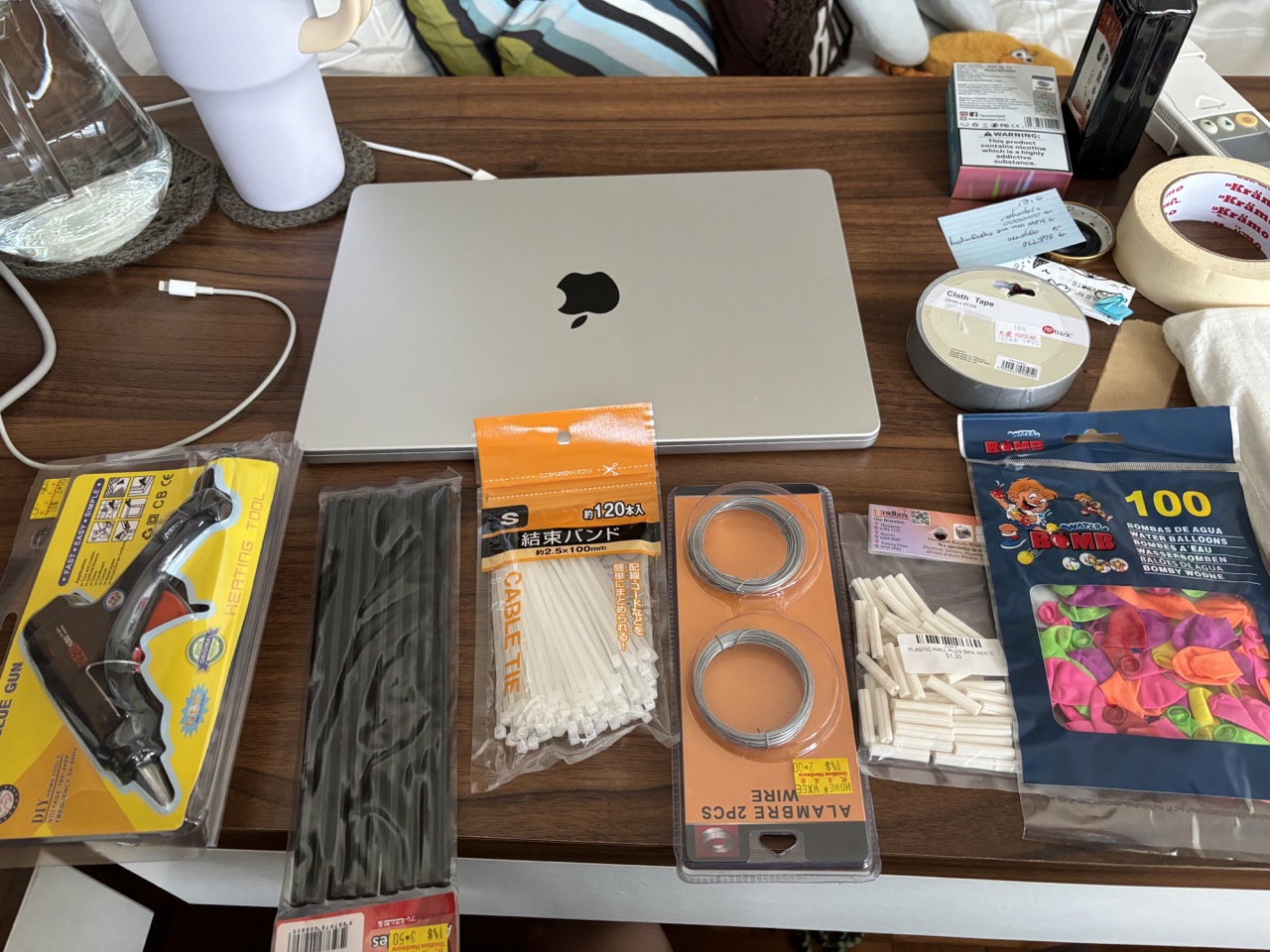
Sutff I got 18 September 2024
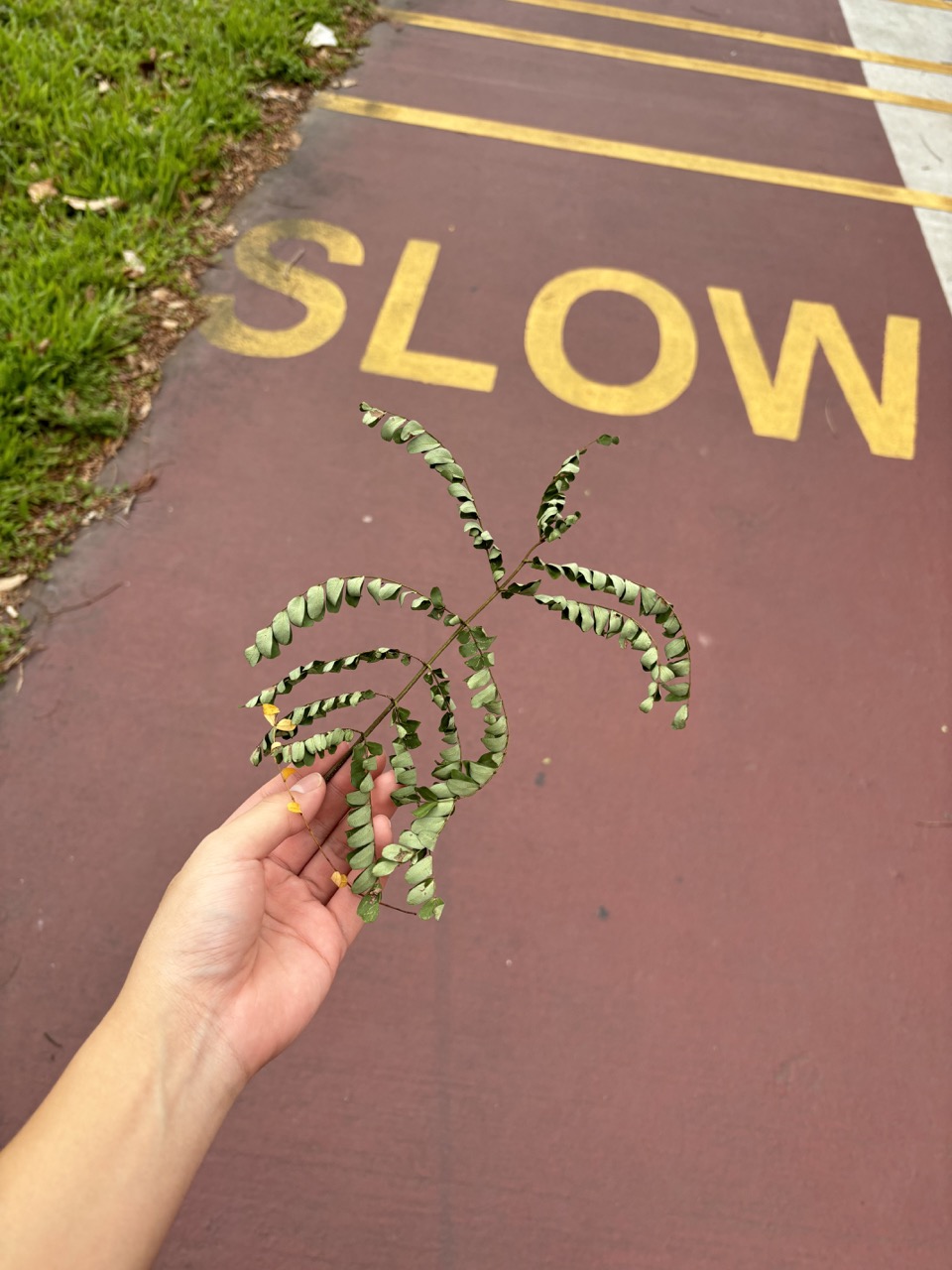
I brought back a dead leaf, too. 18 September 2024
② Task One: Extending Body Senses 🔎
By experimenting with materials to extend my bod, the objective was to examine my interest in various form of an ‘extended senses’. Inspired by the materials used by various artists and designers, I indulged in my imagination through four different exercises covering my hands and face. The following slides break down my thought process, learnings and reflection in working on each of the exercises. To narrowing down the form of extension I prefer.
-
Ⓐ – Touched by a Leaf 👋🏻
Experimenting with leaves, wire and wall plug to extend my fingers I picked a dead leaf on the way home and had an idea to pluck them apart to past onto each of my fingers. I included the wires and wall plug so that I could attempt to tie each stem of leaves to a string to pull them. After altering my fingers, I performed ordinary tasks such as typing on my keyboard and waving to a tree!
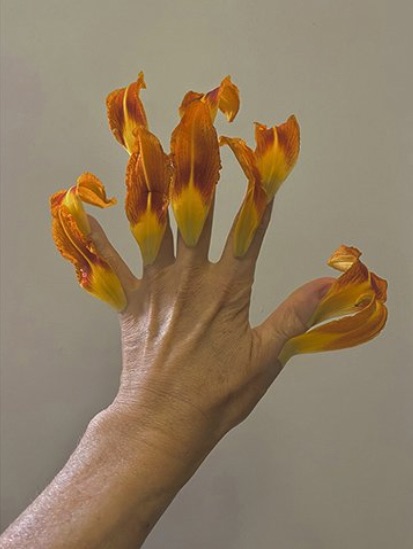
Flower Hands Face Nature by Schwazrtman
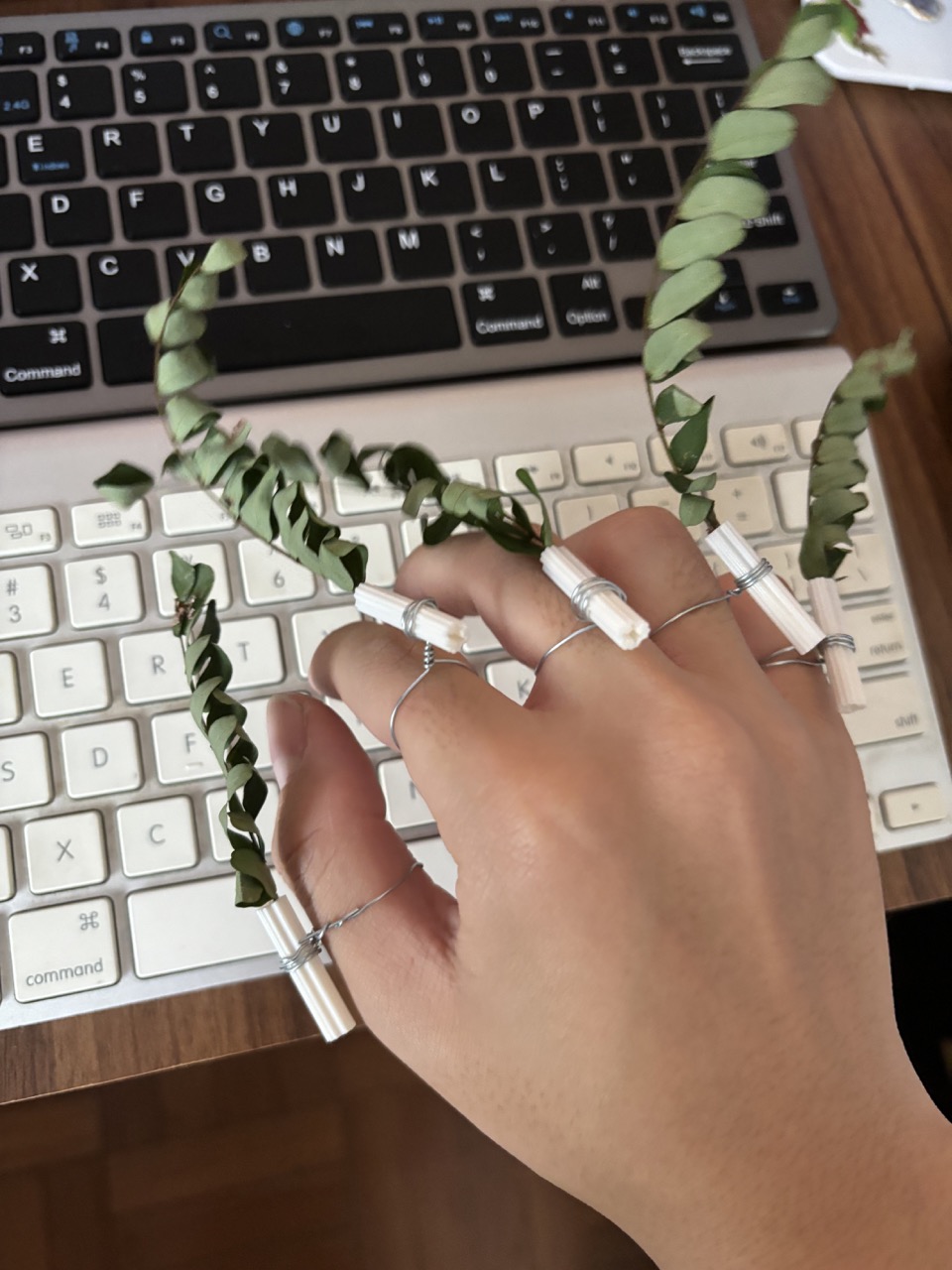
Typing on keyboard (Sep 2024) – Wires, Wall Plug, Dead leaves
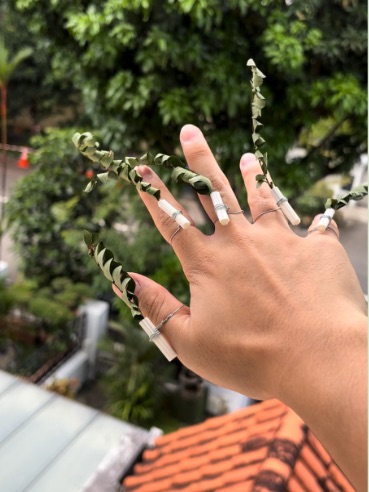
Waving to a tree (Sep 2024) – Wires, Wall Plug, Dead leaves
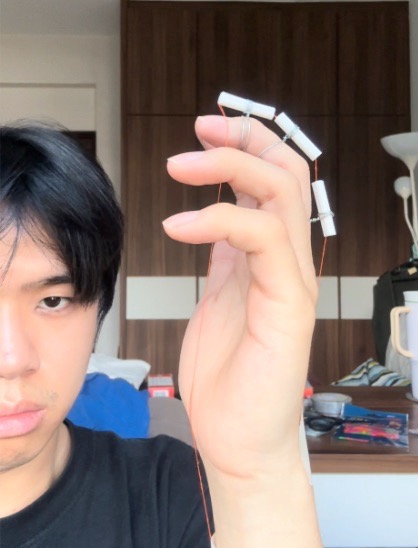
Robot Finger (Sep 2024) Wires, Wall Plug, String
- (1) I like my inspiration picture better, they look more seamless like a real hybrid.
- (2) Although the string mechanism didn’t work out, I can imagine it to be cool.
- (3) It piqued my interest but perhaps with nicer plants.
Reflection:
-
Ⓑ – Human Flappers 🤦🏻♂️
Determined to make the string mechanism work, I decided to work with a simpler idea. Experimenting with paper, string and tapes, I tried extended my face with petals sticked onto strings. This experiment met my objective of engaging my extensions with strings.
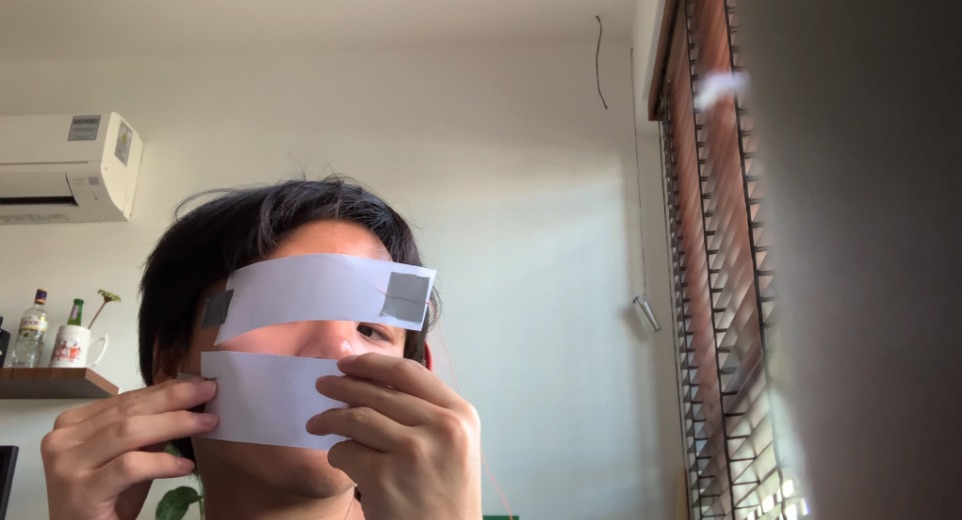
Installing Flappers – Paper, Tape, String
-
Flappers flapping with the wind – Paper, Tape, String
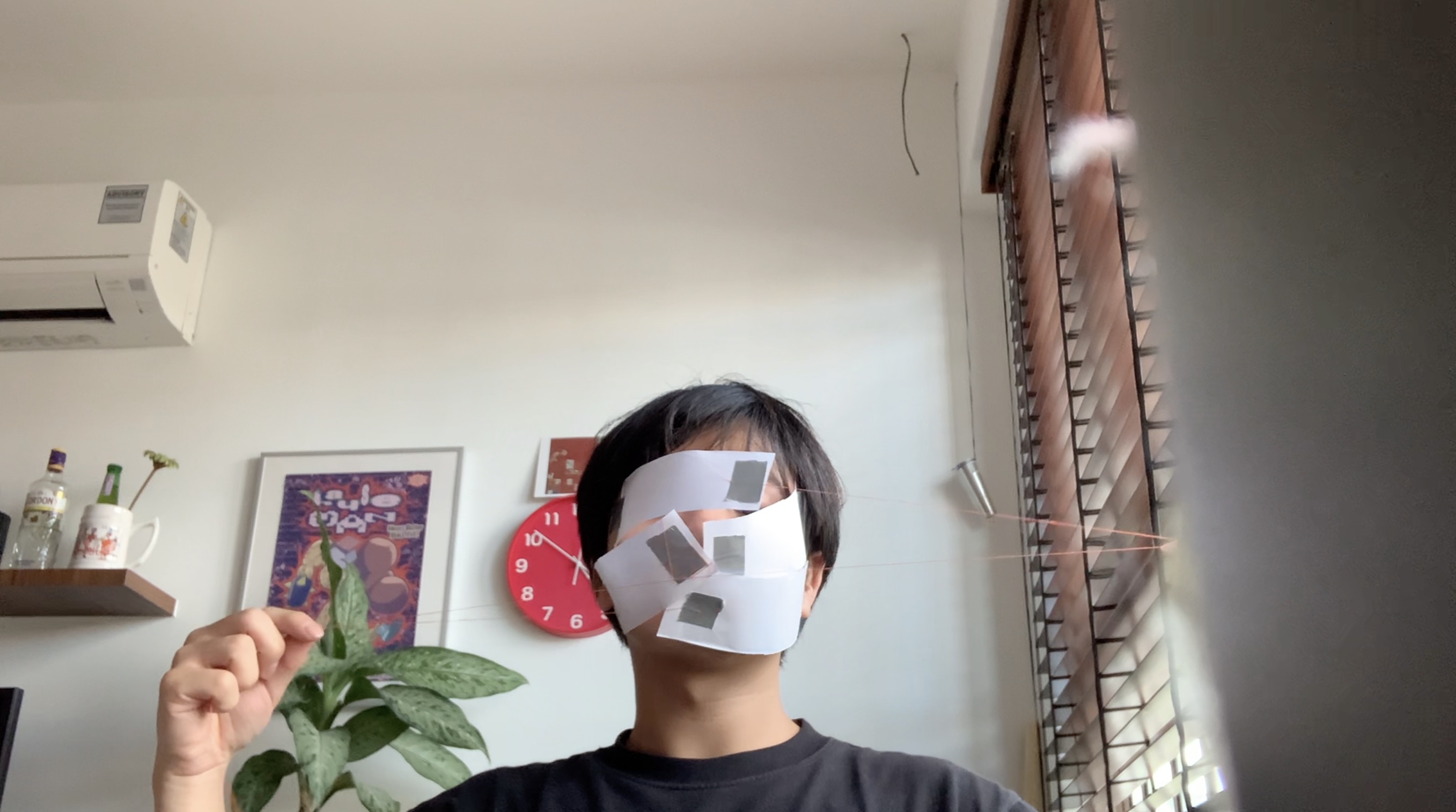
Hibernating – Paper, Tape, String
- (1) Something that surprised me was how fun it was to feel paper flap with the wind direction
- (2) An extension that could alter my sense of sight was interesting
- (3) Working with this mechanism requires more simple approaches to test out how it responds to the body
Reflection:
-
Ⓒ – Snail Head 🐌
In my next exercise, I was prompted by the fact that snails have poor sense of sight. They just sense the world with either dark or light light. They don’t see colour. So I embarked on a mission to make a snail head, which I still have not finished. It is still ongoing and I have plans to make it happen.
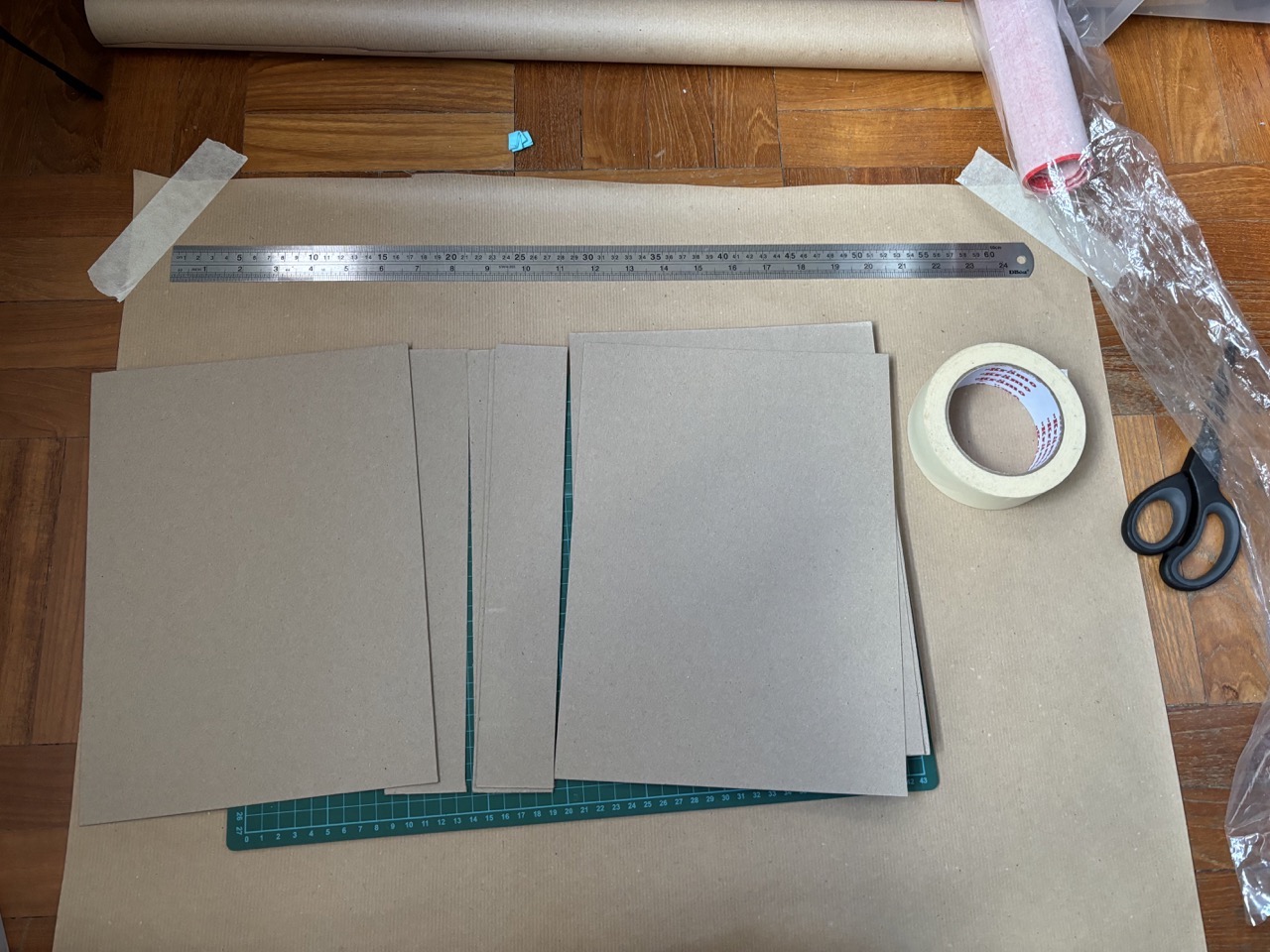
Set Up Cutting Matt, Tape, Cardboard, Ruler and Penknife
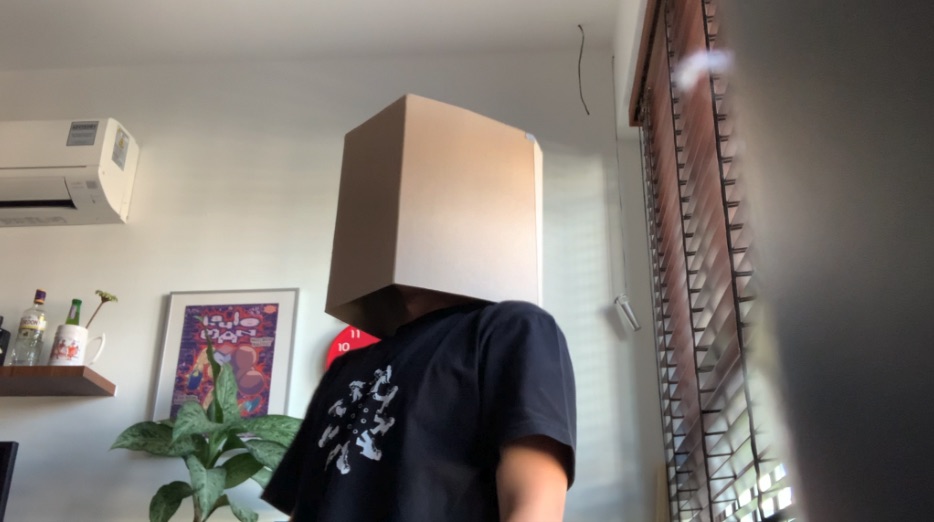
Head base (Sep 2024) – Cupboard,Tape
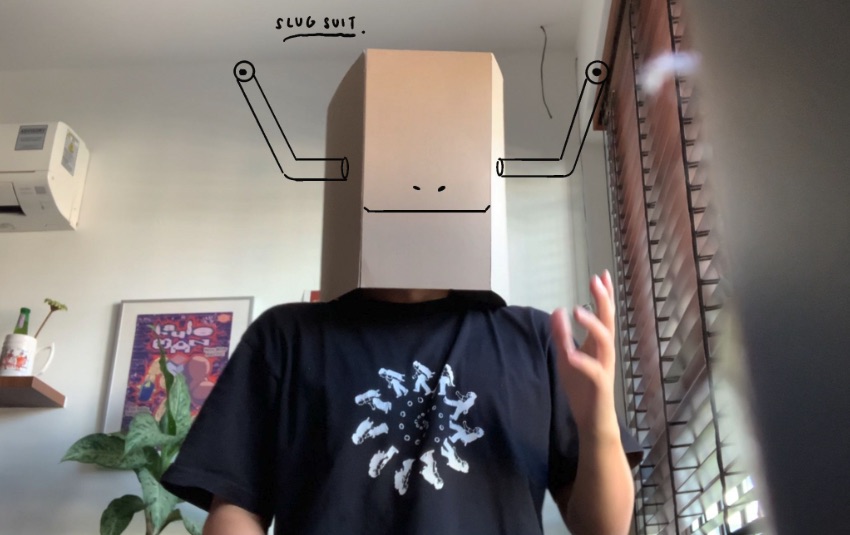
Digita Sketch (Sep 2024) – Cupboard, Tape
- (1) The video documented is kinda funny, and becoming an animal could be an easy humour.
- (2) There could be more engagement between the extension to my body
- (3) I see a potential of using computational sensors to enhance more snail facts for example, light sensor to signal if user is approaching an object.
Reflection:
-
Ⓓ – Cable Head 🔗
Inspired by Shoji Yamasaki’s cable-tie, I was curious about cable-tie as a material as an extension of my head. While exploring, I found a way to engage the extension by sticking parts of the cable tie to my jaw.
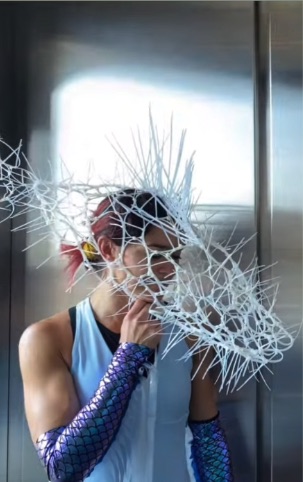
"Costume fittings and rehearsing with school of fishes" by Shoji Yamasaki
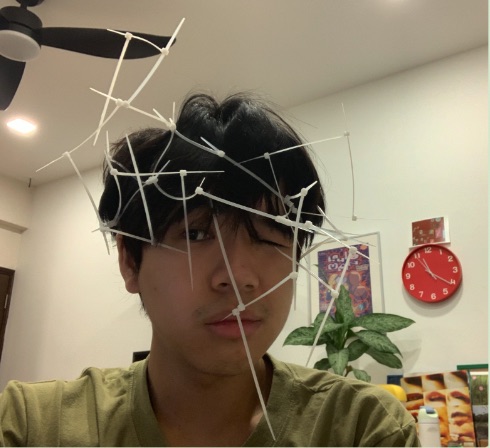
Cable-Tie Head (Sep 2024) – Cable-Tie, Human Head
-
Pretending to be automated – Cable-Tie, Tape, Human head and hands
-
User-testing – Junliang, Cable-Tie, Tape, Human head and hands
- (1) The action of closing and opening my jaw to engage in the extension is fun.
- (2) Cable-tie as a material is accessible, easy to create forms with my head
- (3) Aesthetics-wise, I am not how cable-tie can be presented more professionally unless I spent time in building a craft for sculpting with cable-tie.
- (4) I am also just thinking about cable-tie's relationship with wires.
Reflection:
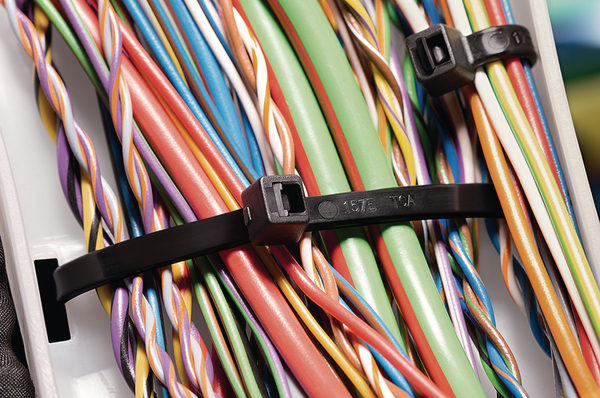
"Cable Ties Polyamide 6.6 standard T120R (111-12036)" Image from HellermannTyton (electronic product supplier)
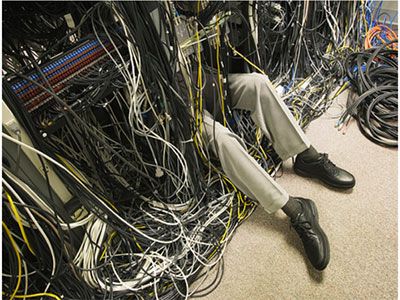
"Worst Examples of Cable Management and How to Prevent Them" Image from Chatsworth Products (cable management company)
Feedback 😮💨
The feedback from my experiments was good. The pretence of being an automated machine reminded the
atelier of the term “Machinal Turk.”. Machinal Turk is a comes from a famous 18th-century hoax: a
chess-playing machine that appeared to play autonomously but had a hidden human operator inside.
Now, the term has been reimagined by Amazon an online platform where businesses can outsource small,
simple tasks to a large pool of workers who complete them for payment.
The idea of hidden human assistance intrigues me, however, when I was questioned
about how these
experiments
meet my research objectives, I couldn't give a straightforward answer. It was at this moment, I realised
I needed to
iron out my readings to provide a foundation for more learnings.
③ Back to figuring things out! 🛒
Returning to last week's question of how well I can convey the interest in this bodily interaction with non-human species. I learned about Gabrys's "Program Earth" and the term "interspecies" where computational sensors or electronic devices are used to encourage people to care more about our planet with a goal of mutually benfitting human and non-human entities.
-
For example, the Interspecies Library. An archive dedicated to curating and advancing artists’ books on alternative interspecies futures. The growing collection aspires to reflect our changing attitudes and acknowledgement of more-than-human worlds.
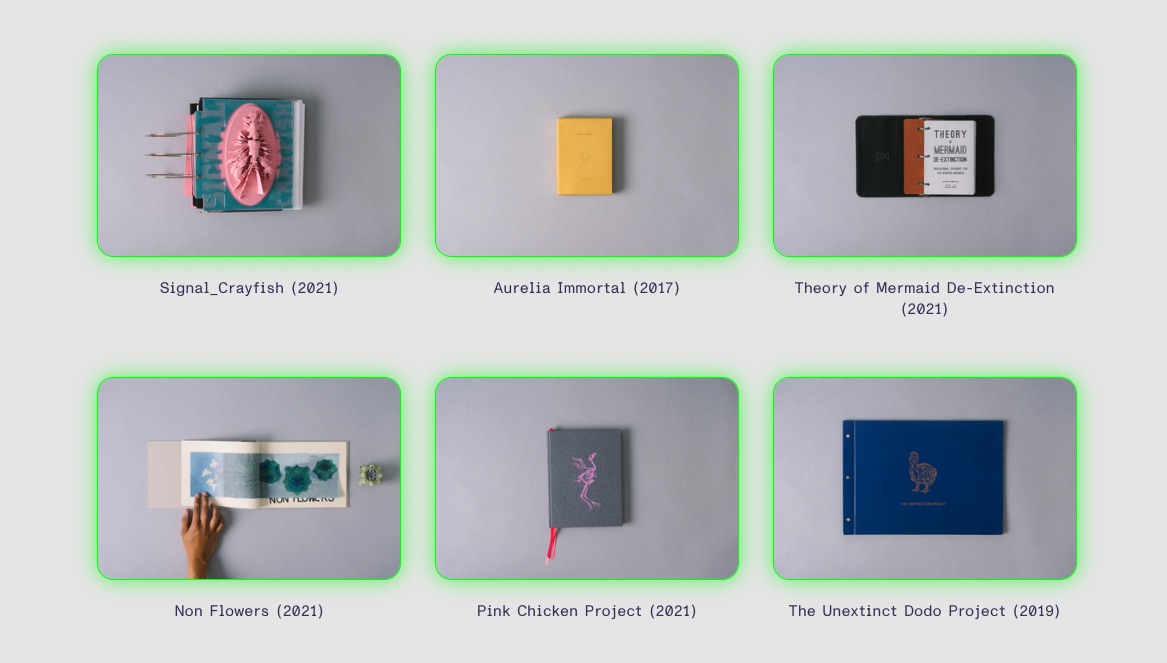
The Interspecies Library Oscar Salguero, Brooklyn, NY
-
Reading up on Program Earth, I also learnt about how environment sensors, such as sensors for air pollution and temperature, can also be used in a creative environmental projects to contribute to the discussion.

Feral Robotic Dogs, reverse engineered by Mike Kai (2009) A project for autonomous dog-robots to sense pollution in environments, originally developed by Natalie Jeremijenko et. al.

Pigeon Blog Website (2006) A project for trained homing pigeons to carry sensor and GPS backpacks and sense air pollution in Southern California, developed by Beatriz da Costa et. al.
Reflection 😮💨
The findings were great. Determined to figure out my RPO, I started a Miro board to organise my
findings in the three research pillars
(1.Speculative Design, 2.Senses mediated by Technology, 3.Queer Ecology). However, when I tried
grouping pieces of information from various readings, it became a giant web of information that did
not link with one another.
So, I kept writing different versions, changing my pillars as I
read up on new things to draw relations. At some point, I even ended up with pillars like IoT,
Cyborgs, and speculative design—which I knew so little about. The slippery slope ended with me
sleeping on it, which ended up: (1)THE THEORETICAL PRACTICE OF QUEER ECOLOGY, (2)CITIZEN SENSING AND ENVIRONMENTAL SENSORS
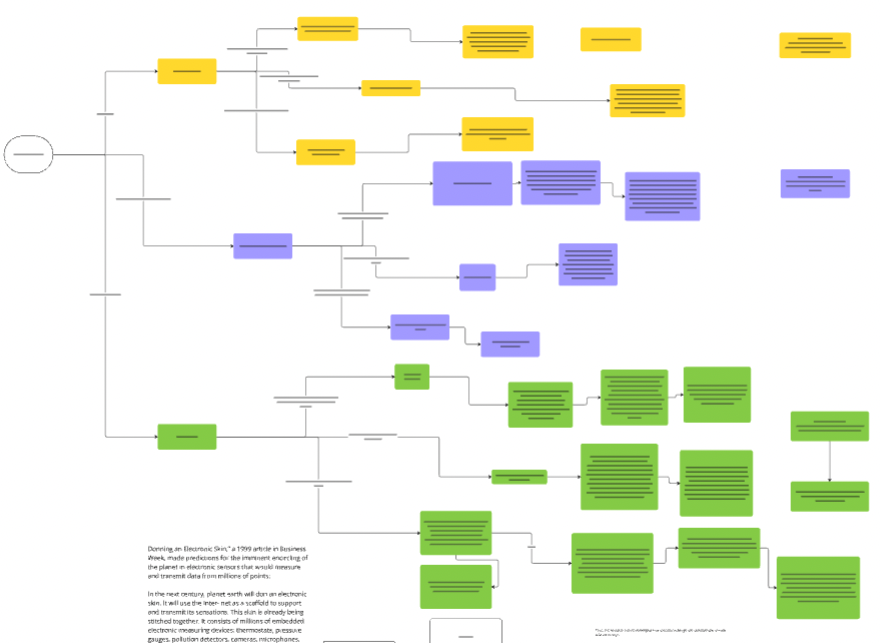
Miro Board (Sep 2024) Strings of knowledge that were hanging loosely
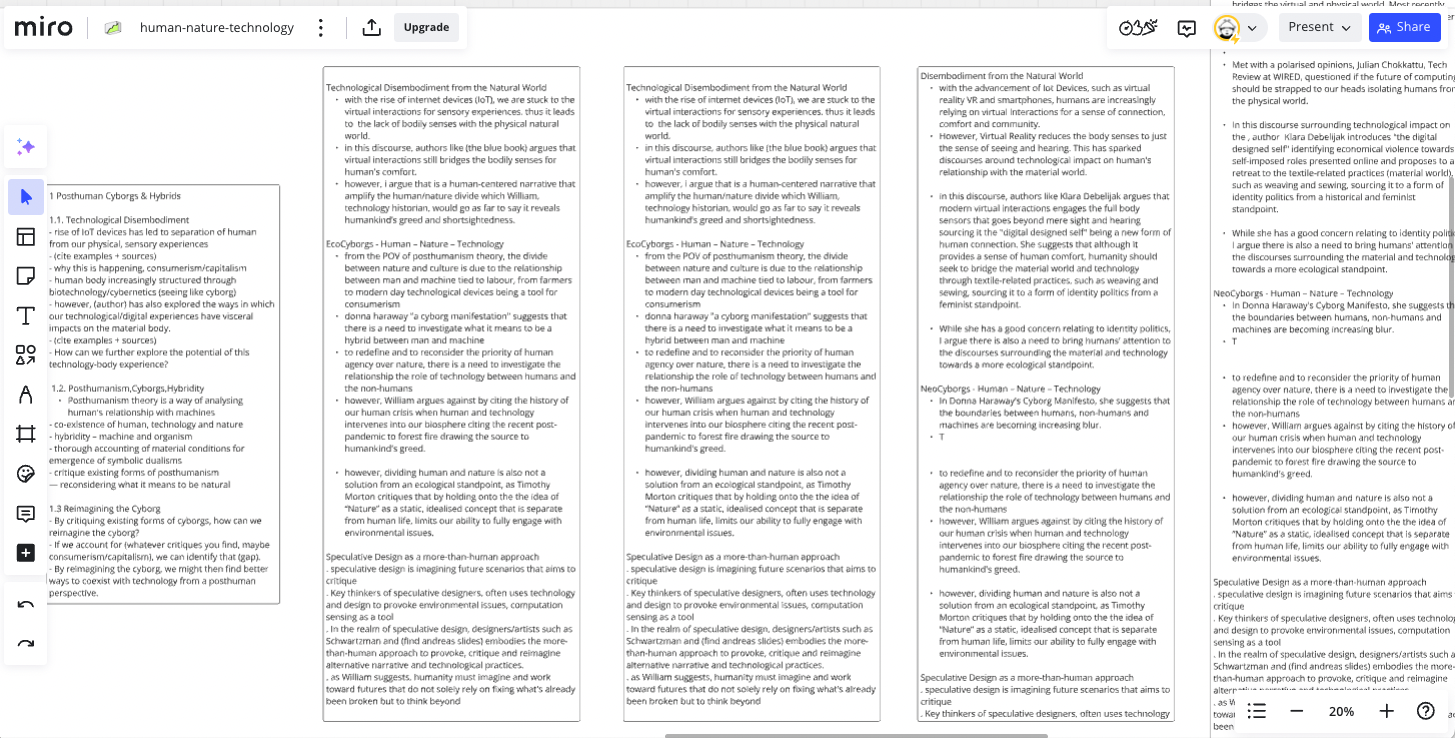
Miro Board (Sep 2024) Strings of knowledge that were hanging loosely.
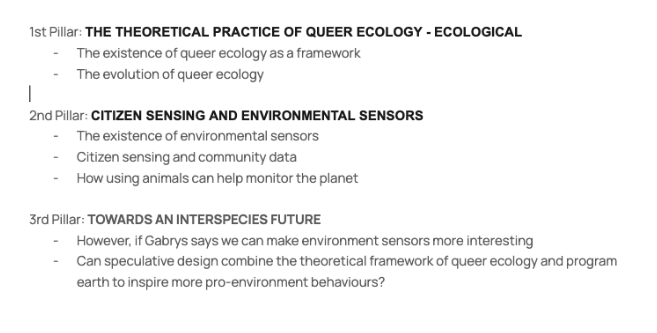
Notes for RPO (Sep 2024) Three Research Pillars